

Web App Development Singapore: 2026 Buyer’s Guide
A strong web app can become the operating layer of your business: portals, dashboards, workflows, and customer-facing tools that run in the browser.
This guide covers when web app development is the right move for Singapore companies, what it costs, and how to choose a partner. For an overview of our work, visit SleekDigital, an app developer and custom software company in Singapore.
SectionWhat Counts as a Web App in 2026
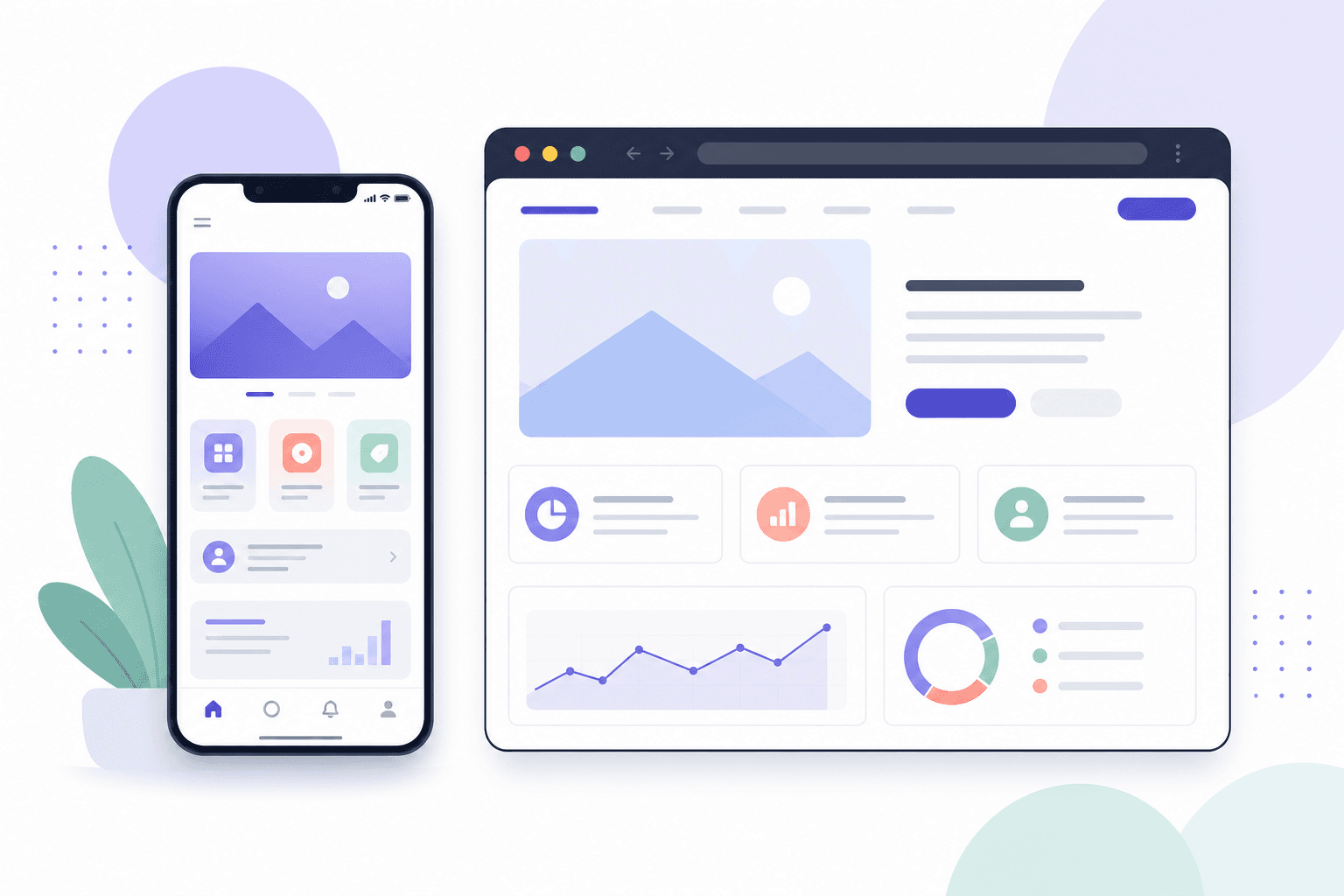
A marketing website is not a web app. A web app usually includes:
- Authenticated users and roles
- Persistent business data
- Workflows (approvals, tasks, orders)
- Integrations with other systems
- Ongoing product iteration after launch
Common examples: customer portals, internal ops dashboards, booking systems, SaaS products, and admin platforms.
SectionWhen a Web App Beats a Mobile App
Choose web-first when:
- Users mainly work on desktops or tablets
- You need fast iteration across many workflows
- Offline mobile use is not critical
- You want one codebase for most users
Choose mobile (or both) when field teams need camera, GPS, push, or offline reliability. Many clients start with a web app, then add mobile. See app development Singapore and React Native app development Singapore.
SectionTypical Web App Costs in Singapore
| Scope | Typical range |
|---|---|
| Simple internal tool | S$20,000 – S$50,000 |
| Customer portal | S$35,000 – S$90,000 |
| Multi-module SaaS / ops platform | S$80,000 – S$200,000+ |
Costs rise with roles, reporting, AI features, and third-party integrations.
SectionTech Stack Decisions That Matter
For most Singapore SME products, a modern stack looks like:
- Frontend: React / Next.js
- Backend: Node.js or Python APIs
- Database: Postgres or equivalent managed DB
- Auth: Secure role-based access
- Hosting: Cloud with staging + production
The stack should match your hiring reality and maintenance plan, not only launch week preferences.
SectionBuyer Checklist for Web App Development Singapore
- Can the team show similar portals or ops systems?
- Do you get interactive design before heavy coding?
- Is there a weekly demo cadence?
- Who owns code, domains, and cloud billing?
- What is the post-launch support model?
- Can they advise on EDG-eligible structure if needed?
If you want a partner that answers these clearly, talk to a software development company in Singapore with product delivery DNA, not only outsourcing capacity.
SectionCommon Mistakes
- Building every feature in version one
- Skipping role and permission design
- Ignoring mobile responsiveness for field managers
- No analytics or audit logs
- Treating launch as the end of product work
SectionHow SleekDigital Builds Web Apps
Our web app development process starts with the operator workflow, then ships usable screens early. You test real flows, not slide decks.
We also connect web apps to AI features when they remove manual work, drafting, document reading, and exception handling. Learn more on the SleekDigital homepage.
SectionNext Step
If you are planning a portal, dashboard, or internal system, we can map scope and phases quickly.
Written by
Lester Law
Building custom software solutions for Singapore businesses. We help companies transform their operations with mobile apps, web platforms, and enterprise systems.